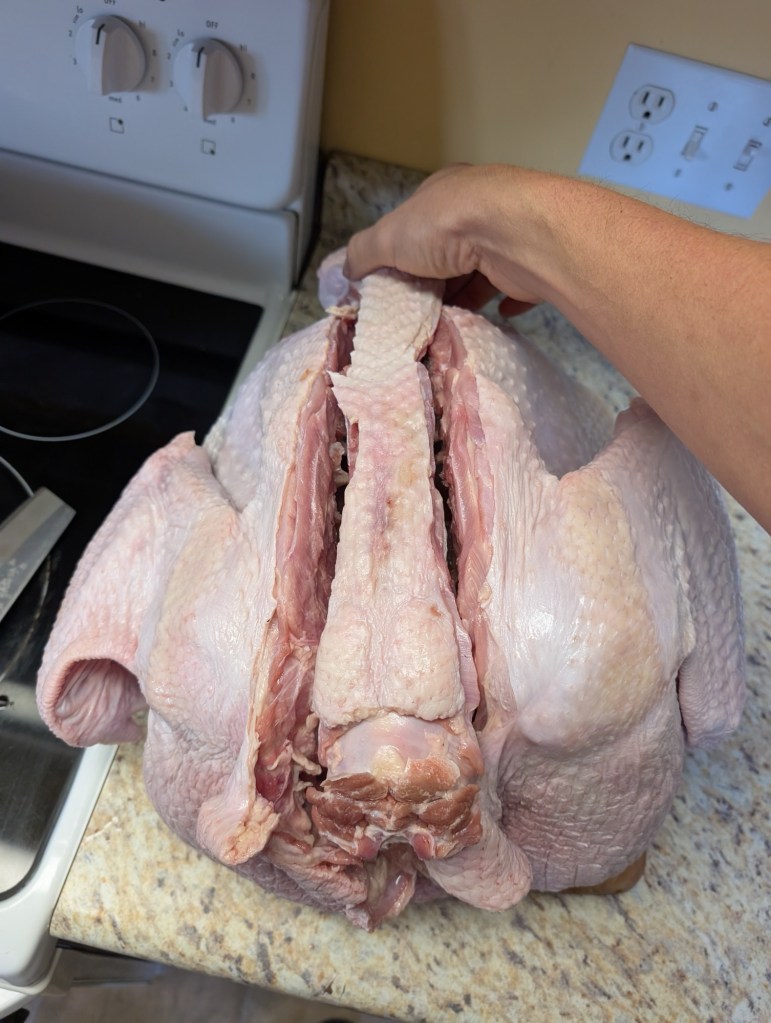
Turkey stock is a delicious and easy to way to make use of every part of the bird, and will come in handy for soups and gravies!
Ingredients
Bone Broth
- Any part of the turkey you’re not eating
- spine
- bones
- wings
- feet
- organs
- salt
- pepper
Turkey Stock add-ins
- celery
- carrots
- garlic
- onion
- sage
- thyme
- rosemary
The ingredients listed above are typical for a Western palate soup base — we use this for butternut squash soup and minestrone.
Matt made a phở broth with turkey bone broth that was delicious! I’ll add that recipe next!
Preparation
1. Roast the turkey parts / bones in the oven in a tray at 350 degrees Fahrenheit until fragrant and browned
(This step is optional, but we think it improves the flavor and makes for clearer, less cloudy broth).
2. Submerge the bones and turkey parts in a large pot and simmer for several hours. Add salt and pepper to taste.
You will get a clearer broth if you skim off any foam that forms on the surface.
The longer you cook the bones and parts, the more nutrients will release into the broth.
A friend once cooked bones down to the point they were soft enough to eat!
If you want thick gravies, cook parts with the skin longer and the collagen will thicken up gravies nicely.
If you want a clearer, thinner broth for soups, stop simmering after about 2-3 hours.
Some people simmer overnight — if you plan to do so, make sure you are using a double bottom pot and have enough water to prevent burning. Never leave a natural gas cooktop unattended.
3. Remove the bones and parts.
4. Strain the broth through a cheese cloth.
At this point, you have bone broth! You can stop here if that’s all you want, or you can keep going to impart more flavor into your stock.
5. Put the strained bone broth back in the pot on the stove at a simmer.
6. Rough chop (you want large pieces that are easy to remove) the onion, celery, and carrots. Smash the garlic cloves but leave whole. Add the herbs as whole sprigs. Add salt and pepper to taste.
7. Simmer over low heat for 2-3 hours, until veggies are soft and the stock is fragrant.
8. Strain out the veggies and herbs (again, recommend a cheese cloth in the strainer.
9. Now you have turkey stock! Stock only lasts a few days in the fridge. Freeze for longer storage (make sure to use jars that are freezer safe and leave room for expansion!) Pressure canning (NOT water bath canning) will give you shelf stable stock.
